Gold chains are more than just stylish accessories—they are portable assets. But many people ask: do gold chains have resale value? Understanding how the resale market works can help you make smart decisions whether you’re in New Zealand or Texas.
The simple answer is yes. Gold chains do have resale value, but the amount you get depends on factors like gold purity, weight, style, and market conditions.
Why Gold Chains Retain Value
Gold chains hold value because they contain real precious metal. Unlike costume jewelry, gold chains are intrinsically valuable. Gold has been a store of wealth for thousands of years because it is:
Rare and durable
Resistant to corrosion and tarnish
Globally recognized and tradable
Easy to melt or resell
Even if a gold chain’s design is out of fashion, the gold itself maintains value.
For more on understanding gold’s intrinsic worth:
👉 Why is gold so valuable
1. Gold Purity Determines Resale Value
The karat of a gold chain plays a major role in resale price:
24K – 99.9% pure gold
22K – 91.7% gold
18K – 75% gold
14K – 58.5% gold
10K – 41.7% gold
A higher karat chain has more gold and will generally resell for more. Lower karat chains contain more alloy metals, which lowers the resale price.
If you’re unsure about your chain’s purity, see:
👉 How to tell if jewelry is gold
2. Weight Matters
Gold chains are typically sold by weight, measured in grams or troy ounces (1 troy ounce = 31.1 grams).
A heavier chain contains more gold, increasing its scrap value.
A thin chain weighs less and will resell for less, even if it’s high karat.
For precise measurement:
👉 How many grams in an ounce of gold in Texas
3. Market Price Impacts Resale
Gold chains’ resale value is influenced by the current gold price, which fluctuates due to:
Inflation and currency shifts
Economic uncertainty
Central bank interest rate policies
Global demand and supply
For sellers in New Zealand or Texas, staying updated on spot gold prices ensures you maximize resale value.
See current pricing insights here:
👉 What is the current price of gold in NZ
4. Retail vs. Resale
When you buy a gold chain new, you pay:
Retail markup
Branding or designer premium
Craftsmanship and store overhead
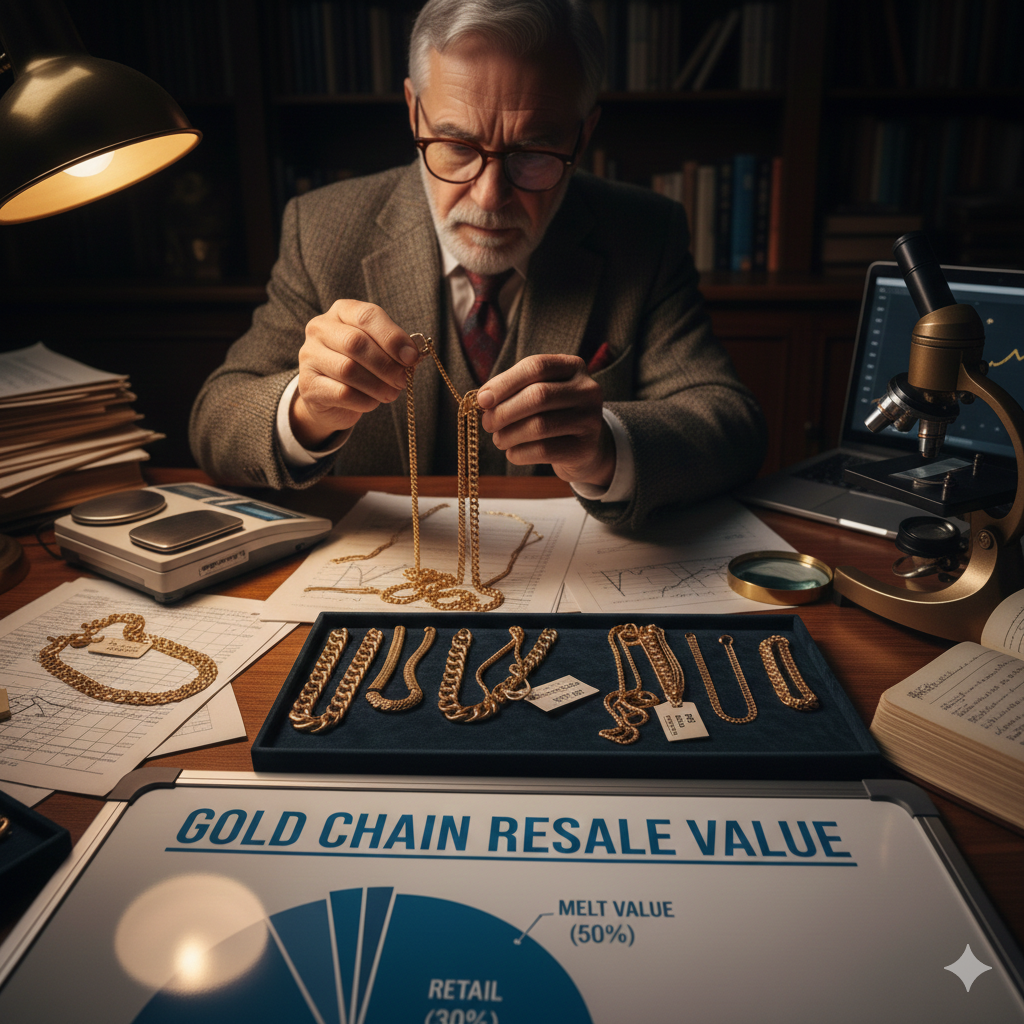
When selling, buyers usually offer scrap gold value, which is lower than retail.
So, while a chain has resale value, it rarely matches the original purchase price, unless it’s a luxury designer piece.
Learn more about resale expectations:
👉 How much can I expect to sell my gold for
5. Designer or Antique Chains
Certain chains can resell for more than melt value if they are:
Luxury branded (e.g., Cartier, Tiffany)
Vintage or antique
Rare or collectible
In these cases, collector demand may add a premium to the gold content.
6. Tips for Maximizing Resale Value
To get the most out of a gold chain sale:
Know the gold purity and weight – buyers pay for actual gold content.
Stay informed about market prices – check local rates in NZ or Texas.
Choose reputable buyers – jewelers, gold buyers, or certified dealers.
Keep documentation – receipts, certificates, and hallmark proof.
Consider timing – sell when gold prices are high for the best return.
For detailed guidance:
👉 What’s the best way to sell a gold chain?
Final Thoughts
So, do gold chains have resale value? Absolutely.
While resale may not always match retail purchase price, the gold content ensures intrinsic value. Whether you’re selling in New Zealand or Texas, understanding gold purity, weight, and market conditions allows you to maximize returns.
Gold chains remain not only a fashion statement but also a reliable store of wealth for collectors and investors alike.